
How to Screen Companies for Innovation Programmes

Words Lily Ruaah

How to Screen Companies for Innovation Programmes

Screening innovation programme applicants at scale is hard. Learn how programme managers use company data to verify eligibility, track record and fit.

Innovation programmes exist to back the businesses most likely to benefit from support and most likely to use it well. Deciding who that actually is, at scale, is the hard part.

Competitive rounds can attract hundreds or even thousands of applications, and assessor time doesn’t scale with them. Every application makes claims about company size, sector, ownership and track record; claims that need checking, not taking on trust. And behind the applicant sitting in front of an assessor there’s usually a wider picture: other grants, other accelerators, other funding, that no single reviewer can see from the form alone.

Systematic screening is what separates programmes that can defend their decisions from programmes that are just doing their best under pressure. This guide covers what screening innovation programme applicants actually involves, the data it depends on, and a framework for making it repeatable. It’s a companion to our guide on how to monitor companies in innovation programmes, which picks up once a cohort has been selected; this one covers what happens before an offer is made.

Why screening applicants is important

Screening isn’t a box-ticking exercise ahead of the ‘real’ assessment. It’s what makes the real assessment possible, and defensible, once it’s done.

Programme integrity and public accountability

Most innovation programmes spend public money, institutional funds, or a scarce allocation of places, and someone will eventually ask how those decisions were made. Rigorous screening gives programme managers a clear, evidenced answer instead of a description of good intentions.

Efficiency, protecting scarce assessor time

Expert assessor time is often the tighter constraint in a programme, tighter than budget in many cases. Screening out applicants who are plainly ineligible, or flagging the ones that need a closer look, means limited reviewing capacity goes towards the applications that actually warrant a judgement call.

Portfolio balance across sectors, regions and stages

A programme that unintentionally over-indexes on one sector, one region or one company stage isn’t serving its full remit, even if every individual selection looks sound on its own. Screening data makes those patterns visible early enough to correct, before the cohort has already been announced.

Fraud and misrepresentation risk

Application forms are self-reported by design. Most applicants describe their business accurately, but some overstate size, understate ownership complexity, or leave out a funding history that would affect eligibility. Independent verification catches this before it becomes the programme’s problem instead of the applicant’s.

Countering bias and the Matthew effect

Familiar founders, well-connected applicants and polished pitches tend to do well in any selection process that relies heavily on subjective judgement, whether or not that reflects genuine merit or fit. Left unchecked, this compounds into what’s known as the Matthew effect: programmes over-fund companies that already have grants, exits and institutional backing, and under-fund newer or less-visible businesses that might benefit most. Structured, data-led screening gives assessors an evidenced starting point alongside their own judgement, not instead of it.
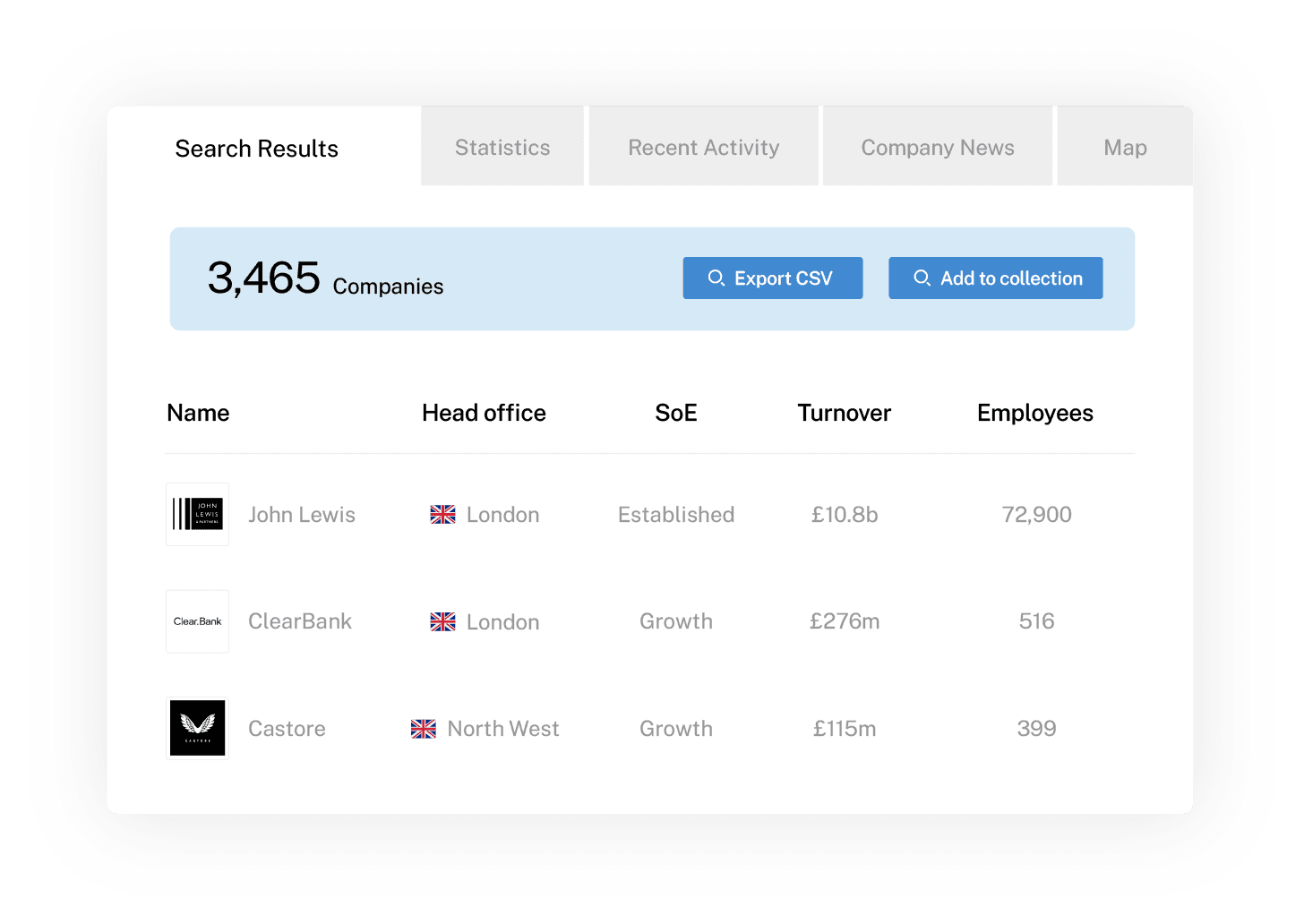
How to Monitor Companies in Innovation ProgrammesRead the blog

What screening involves, and the data behind it

Screening applicants well means answering several distinct questions, each backed by data that’s independent of the application form itself, rather than the form alone.

Eligibility – is the applicant actually eligible?

The most basic check, and the one that should happen before anyone spends time on a deeper review: does this company meet the stated eligibility criteria at all? That covers company age, size thresholds, sector, small and medium-sized enterprise (SME) status, and geographic location, verified against independent firmographic data (company registration, address, size and sector) rather than what the form says.

Ownership and control

Eligibility rules often depend on ownership structure: SME status thresholds, state aid rules, and restrictions on subsidiaries of larger or ineligible parent companies all hinge on it. Checking Persons with Significant Control, parent companies and group structure manually across a large applicant pool is slow, but skipping it leaves a real gap in eligibility screening.

Scope and fit

Beyond eligibility, does the applicant’s activity actually match what the programme is designed to fund? A company can be perfectly eligible on paper and still be a poor fit for a programme focused on a specific technology area or stage of development. 

Standard Industrial Classification (SIC) codes are a blunt instrument here, self-selected, rarely updated, and often too broad to be useful. Buzzword-based classification, built from what a company actually says about what it does, gives a more accurate read on genuine scope and fit. Beauhurst’s sophisticated industry classification organises companies by what they actually do, rather than what SIC code they might fall into. 

Map the UK economy with our industries classifications systemRead the blog
take a tour image
Take a tour

Want to see Beauhurst action? You’re in luck. Take a virtual tour of the platform and discover how we get our unbeatable data insights.

See the platform

Track record

Claims about previous grants, prior fundraising, patents or commercial traction are easy to make and not always easy to check from the application form alone. Independent track record data (patents, Research and Development (R&D) tax credit claims, previous grant awards, university spinout status) gives assessors confidence that a strong application reflects a genuinely strong company.

Financial trajectory

Filed accounts, headcount trends and other financial data help assessors judge whether an applicant’s claimed trajectory holds up, and provide useful context for merit assessment alongside the narrative in the application itself. Learn how to conduct a company financial health check.

Additionality – would the applicant do this without funding?

Additionality asks whether programme support will actually change what a company does, instead of simply subsidising activity that would have happened anyway. It’s one of the harder judgement calls in assessment, but financial trajectory, existing investment and funding history all provide useful evidence to inform it.

Cross-programme participation – who else is funding them?

A company might be applying to several grants, accelerators and catapult programmes at once, without any single assessor seeing the full picture. Visibility across Innovate UK grants, Enterprise Investment Scheme (EIS) and Seed Enterprise Investment Scheme (SEIS) activity, accelerator cohorts and catapult engagement matters for eligibility rules that prohibit double funding, and for understanding how much support a business is already receiving relative to others in the pool.

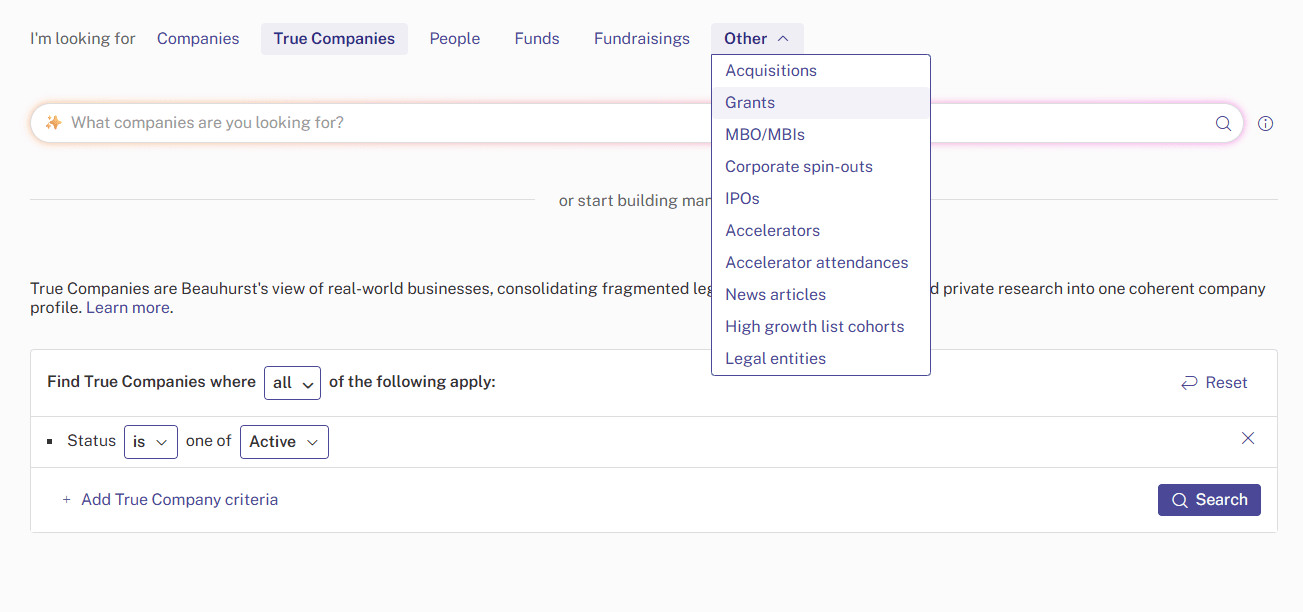
Beauhurst allows you to go beyond just searching across companies, you can also search across fundraisings, funders, grants, and more. 

Portfolio balance across the cohort

Screening isn’t only about individual applicants. Programme managers also need a live view of who’s coming through the pipeline by sector, region and stage, so imbalances can be addressed before final selections are locked in.

Verified contact details

Once an application moves to interview or further due diligence, verified, up-to-date contact details for the company save time that would otherwise go into tracking people down.

Systematic screening in six steps

The specifics vary by programme, but the underlying process for screening a large applicant pool holds up across most contexts.

Step 1: Automate eligibility checks against independent data

Run the basic eligibility criteria (company age, size, sector, location, SME status) against independent company data before any manual review begins. This filters out clearly ineligible applications early and frees up assessor time for applications that warrant real judgement.

Step 2: Verify applicant claims against company data

For applications that pass initial eligibility, cross-check the claims made in the form (company size, ownership, prior funding, financial position) against independently sourced data. This is where misrepresentation, deliberate or otherwise, tends to surface.

Step 3: Assess track record and prior programme engagement

Layer in verified track record data: patents, R&D tax credit history, previous grants, and prior accelerator or catapult involvement. This gives assessors a fuller picture of the applicant’s genuine innovation activity, beyond what’s been written into the application.

Step 4: Score fit, merit and additionality

With eligibility and track record verified, assessors can focus their judgement where it matters most: on scope and fit, technical and commercial merit, and additionality, informed by evidence rather than working from the application alone.

Step 5: Check for portfolio balance

Before final selections are made, review the shortlist against sector, region and stage to check the cohort isn’t unintentionally skewed. This is easier to correct at this stage than after offers have gone out.

Step 6: Escalate borderline cases with a clear data picture

Not every application resolves cleanly. For borderline cases, a clear, independently verified data picture makes it much easier for a selection committee to reach and justify a decision.

How Beauhurst helps screen innovation programme applicants

Screening a large applicant pool by hand, checking company registration, ownership, financials and funding history one application at a time, doesn’t scale. Beauhurst brings that verification into one place, so programme teams aren’t piecing it together from a dozen separate sources under time pressure.

Beauhurst covers the UK, Germany and Ireland private companies in one dataset, so eligibility and existence checks (company age, size, sector, registered location) can be run instantly rather than chased individually across Companies House and other sources. 

  • Ownership structure, Persons with Significant Control and parent-subsidiary relationships are visible in one place, making it faster to confirm SME status and catch ineligible group structures that would otherwise take real digging to find. 
  • Filed accounts, headcount trends and other growth signals give assessors independent evidence to weigh against the narrative in an application. 
  • Previous grant history, university spinout status, R&D tax credit claims and patent activity are all tracked, giving a verified read on genuine innovation track record rather than relying on self-reported claims. 
  • Cross-programme flags across Innovate UK, catapults, accelerators and EIS/SEIS activity mean assessors can see who else is already funding an applicant, instead of assessing each application in isolation. 
  • Buzzword-based sector classification gives a more accurate read on scope and fit than SIC codes alone. And when an application moves to interview, verified contact details mean assessors spend their time on the conversation itself, not on tracking down who to speak to.

BeauhurstImpact is the product line built for programme managers, universities, catapult centres and government bodies running innovation programmes at scale, bringing eligibility, ownership, track record and cross-programme data together for screening large applicant pools, and carrying through into cohort monitoring once selections are made.

Building a screening process that holds up

Screening at volume will always involve judgement calls. What separates a defensible process from a rushed one is whether that judgement is backed by verified, independent data rather than the application form alone.

Get the screening stage right and the rest of the process gets easier: assessors spend their time on genuine judgement calls instead of chasing down basic facts, and the cohort that emerges is one a committee can stand behind if it’s ever questioned. Once that cohort is selected, the same kind of verified data carries through into monitoring it, covered in our companion guide.

If you’re building or refreshing a screening process for an upcoming round, speak to our team about BeauhurstImpact to see how it fits alongside your existing assessment

Decision-grade data for local, regional and central government, and universitiesDiscover more about BeauhurstImpact

FAQ

Discover our data

Get access to unrivalled data on all the companies you need to know about, so you can approach the right leads, at the right time.

Book a demo today to see all of the key features of the Beauhurst platform, as well as the depth and breadth of data available.

An associate will work with you to build a sophisticated search, returning a dynamic list of organisations that match your ideal customer profile.