What innovation programme monitoring actually involves
Innovation programme monitoring is often confused with formal evaluation. The two are closely related but serve different purposes: monitoring collects evidence throughout a programme, while evaluation assesses whether objectives have ultimately been achieved.
Here’s what the core components of innovation programme monitoring actually look like.
Formal evaluation versus continuous monitoring
Formal evaluations typically happen at defined milestones or after a programme has concluded. Their purpose is to assess overall effectiveness, measure economic impact, and determine whether objectives have been achieved — an important part of public sector accountability.
Continuous monitoring works differently. It collects information throughout the programme lifecycle rather than at fixed points in time, which lets organisations spot trends earlier and respond to emerging challenges while there’s still time to act on them.
The Magenta Book and where it fits
Organisations responsible for evaluating publicly funded innovation programmes often use HM Treasury’s Magenta Book as a best practice guide. It sets out recognised approaches for designing evaluations and measuring programme impact, helping organisations assess whether an intervention has achieved its intended outcomes.
The Magenta Book focuses on evaluation, not the day-to-day process of monitoring programme participants. Formal evaluations often happen after a programme has ended, whereas monitoring provides ongoing insight throughout delivery, strengthening the evidence base organisations draw on for innovation programme evaluation in the UK. Continuous monitoring complements the Magenta Book rather than replacing it.
Company-level monitoring versus portfolio-level monitoring
Effective monitoring operates at both company and portfolio level. Individual company monitoring tracks the progress of each participant: financial performance, fundraising activity, innovation milestones, or changes in company status over time.
Portfolio monitoring looks across the entire cohort, surfacing broader patterns that aren’t visible when reviewing companies one at a time. Programme managers can compare sectors, regions, or participant groups to see where support is having the greatest impact. Together, the two views give a more complete picture of programme performance.
During-programme monitoring versus post-programme monitoring
Monitoring should begin before support is delivered and continue after a company leaves the programme. Establishing a baseline at the point of entry lets organisations measure progress consistently over time, and gives useful context for interpreting outcomes later.
Post-programme monitoring matters just as much. Many innovation outcomes take several years to emerge, particularly for research-intensive businesses. Continuing to track participants after completion helps organisations understand longer-term impact, catch delayed successes, and build stronger evidence for future funding and programme development.
The data you need to monitor innovation programme companies
Successful monitoring depends on more than collecting updates from participants. Organisations need reliable, independently verified data that gives a consistent view of every company throughout its journey.
Combining multiple data sources builds a more complete picture of programme outcomes, and lets programme managers spot trends, compare participants, and build stronger evidence for future evaluations.
Firmographic baseline: age, size, sector, region, and ownership
Every monitoring programme should begin with a clear baseline. Capturing core company information at the point of entry gives a consistent reference for measuring future progress — without it, it’s much harder to tell whether meaningful change has actually taken place.
Useful firmographic data includes incorporation date, company size, sector, registered location, and ownership structure. These characteristics help programme managers understand the make-up of each cohort, compare outcomes across similar businesses, and build the matched comparison groups that make future impact evaluations more robust and easier to interpret.
Financial data: turnover, headcount, profitability, and filed accounts
Financial performance remains one of the clearest indicators of business growth. Monitoring changes in turnover, employee numbers, and profitability helps organisations see whether companies are developing after receiving programme support, and filed accounts provide independently reported information that can be compared consistently across a whole cohort.
Financial data is best read over several reporting periods rather than in isolation. Many innovative businesses invest heavily before generating significant revenue, particularly in research-intensive sectors, so looking at long-term trends helps distinguish temporary fluctuations from sustained commercial progress.
Capital events: fundraisings, exits, and dissolutions
Financial accounts tell only part of a company’s story. Capital events often signal growth, investment readiness, or business maturity earlier than annual reporting does, helping programme managers understand how companies are progressing between reporting cycles.
Key events include equity fundraisings, acquisitions, public listings, and business exits. Dissolutions and insolvencies matter just as much to track, since they provide important evidence about programme outcomes — recording both positive and negative events reduces survivorship bias and gives a more accurate read on cohort performance over time.
Innovation signals: patents, spinouts, and R&D tax credit activity
Innovation programmes are designed to support businesses developing new products, technologies, and services. Monitoring innovation activity alongside financial performance gives a richer picture of whether companies are progressing towards commercial success.
Useful indicators include patent registrations, Research and Development (R&D) tax credit claims, additional grant funding, and university spinout status. These signals often appear before revenue growth or profitability improves, so tracking them helps organisations spot companies building valuable intellectual property and continuing to invest in innovation after a programme ends.
Growth signals: hiring, premises, and digital footprint
Not every sign of business growth shows up in financial statements. Companies often demonstrate progress through operational changes that become visible much earlier, and monitoring these wider indicators helps programme managers build a fuller picture of development between reporting periods.
Recruitment activity, office expansion, new premises, and changes to a company’s digital presence can all indicate growth. Leadership appointments, product launches, and increased commercial activity may also suggest a business is entering a new stage of development — combined with financial and innovation data, these signals broaden the view of company performance considerably.
Cross-programme participation: Innovate UK, Catapults, EIS and SEIS, and accelerators
Many innovative businesses receive support from several organisations during their growth journey. Enterprise Investment Scheme (EIS) and Seed Enterprise Investment Scheme (SEIS) tracking provides useful context here too, showing how businesses access investment alongside grants, accelerators, and university support.
A single company might participate in an accelerator, receive Innovate UK funding, secure investment through EIS or SEIS, and collaborate with a Catapult centre, all within a fairly short period.
Understanding these overlaps matters when monitoring programme outcomes. Without that context, organisations risk crediting a single intervention with growth that several different sources of support actually contributed to.
A framework for monitoring an innovation programme cohort
A structured monitoring framework helps organisations collect consistent data and report outcomes with greater confidence. Every programme has different objectives, but the underlying process stays broadly the same.
The framework below can be adapted for government programmes, university accelerators, Catapult centres, and regional innovation initiatives.
Step 1: Set the baseline at programme entry
Effective monitoring starts before support begins. Recording baseline information for every participant creates a consistent reference point for measuring future progress — without it, organisations risk comparing companies at different stages of development or working from incomplete historical information.
A strong baseline should include firmographic details, financial performance, innovation activity, and previous funding history. Programme managers may also want to record existing partnerships, intellectual property, and previous participation in innovation initiatives.
Step 2: Define your monitoring KPIs
Once the baseline is set, organisations should identify the key performance indicators (KPIs) that best reflect programme success — aligned with the programme’s actual objectives, rather than an attempt to track every available data point.
Typical KPIs include employment growth, revenue growth, fundraising activity, survival rates, patent registrations, and follow-on funding. Some programmes also track export activity, university collaboration, or commercial partnerships.
Step 3: Track individual companies continuously
Monitoring should run throughout the programme rather than relying on scheduled reporting periods alone. Regular updates help organisations catch significant developments as they happen, and create space to offer additional support where it’s needed.
Continuous monitoring combines participant engagement with independently verified company information. Financial filings, fundraising events, leadership changes, and innovation activity can all provide valuable evidence of progress.
Step 4: Roll up to portfolio-level insights
Individual company monitoring matters, but programme managers also need to understand how the whole cohort is performing. Portfolio-level analysis surfaces trends that aren’t obvious when reviewing companies one at a time.
For example, organisations can compare outcomes across sectors, regions, or business stages to see where support is delivering the strongest results, or track average employment growth, investment raised, or business survival across different cohorts.
Step 5: Build a matched non-participant comparison group
Participant outcomes alone don’t show whether a programme genuinely influenced company performance. Organisations also need to look at how similar businesses performed without receiving support — the foundation of a meaningful counterfactual analysis.
Comparison companies should closely resemble programme participants. Sector, company age, location, size, and innovation profile all help improve the quality of the comparison.
Step 6: Feed insights back into programme design
Monitoring should inform future decisions, not just record historical outcomes. Reviewing performance data throughout the programme helps organisations see which activities generate the greatest value, and where improvements are needed.
Insights gathered through monitoring can shape eligibility criteria, mentoring provision, funding allocation, and programme design. They can also flag gaps in support or highlight sectors that need a different approach, using the evidence this way is what actually improves future cohorts, rather than just describing past ones.
Step 7: Refresh the baseline and repeat
Innovation ecosystems move quickly. Companies evolve, markets shift, and new cohorts enter programmes each year, so monitoring works best as an ongoing process rather than a one-off exercise.
Refreshing baseline information at sensible intervals keeps datasets accurate and supports meaningful long-term analysis.
Common innovation programme monitoring pitfalls
Even well-designed monitoring frameworks can produce misleading results if important factors get overlooked. Here’s where that tends to happen.
Waiting for formal evaluation instead of monitoring live
Formal evaluations are an essential part of assessing innovation programmes, but they often land months or years after support has ended — by which point, the chance to improve delivery or step in with extra help has usually passed.
Continuous monitoring closes that gap, giving programme managers regular insight into company performance so they can spot emerging trends, respond to challenges, and show progress well before a formal evaluation begins.
Relying only on self-reported data from participants
Participant surveys and progress reports are genuinely useful, they capture context that company data alone can’t. The problem is relying on them exclusively: companies submit inconsistent updates, miss important developments, or stop responding altogether, leaving gaps that independently verified data can fill.
Missing dissolutions and exits: survivorship bias
Successful companies tend to get the most attention. But businesses that dissolve, enter administration, or fail to grow commercially matter just as much to a fair evaluation. Leaving them out creates survivorship bias and can significantly overstate how well a programme actually performed.
Monitoring should capture the full journey of every participant, not just the ones that did well. Including unsuccessful businesses helps organisations spot common barriers to growth, improve future programme design, and produce evidence that funders and policymakers can actually trust.
Ignoring cross-programme participation and attribution complexity
Innovative businesses rarely receive support from just one organisation. Many participate in multiple accelerators, secure grant funding, raise investment, and work with research institutions throughout their development, which makes attribution genuinely complex. Without visibility across those different interventions, organisations risk overestimating their own programme’s contribution.
Weak counterfactual choice
A strong counterfactual is what makes it possible to say a programme influenced outcomes at all. If the comparison group differs significantly from participants, that conclusion gets a lot shakier.
Building an effective comparison group means paying real attention to company age, sector, location, size, and innovation activity — the closer the match, the more credible the resulting evaluation.
How Beauhurst supports innovation programme monitoring
Managing an innovation programme cohort gets harder as participant numbers grow. Tracking financial performance, innovation activity, and long-term outcomes across hundreds of businesses by hand quickly turns into a full-time job.
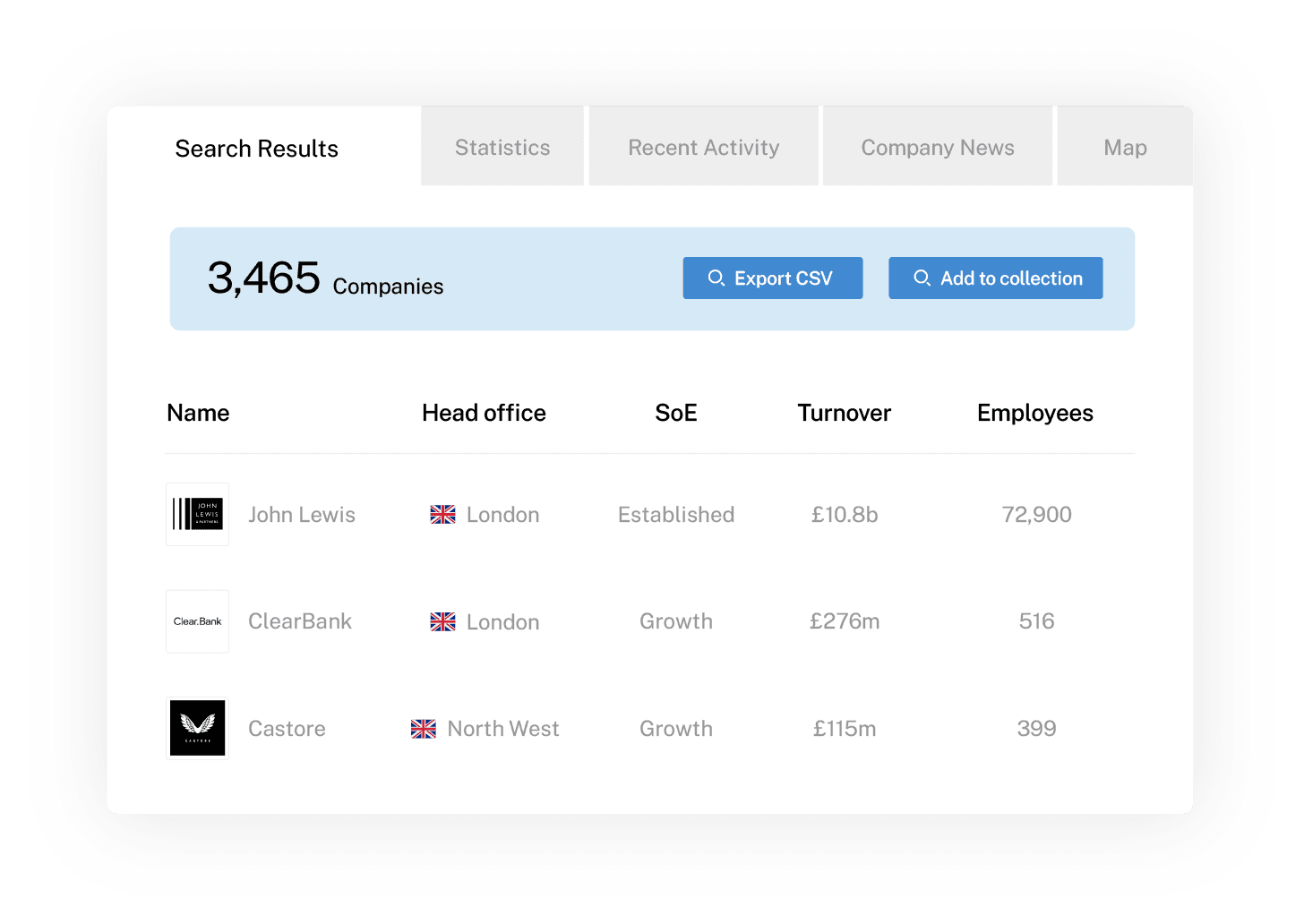
Beauhurst brings together UK private company data in one place, so programme managers can track businesses on a single platform instead of pulling information from a dozen different sources.