Midlands Engine. Northern Powerhouse. Levelling Up. Power Up the North. The last decade has seen a number of initiatives and campaigns designed to redress regional inequalities across the UK.
Following the election of the Labour Party in July 2024, the UK Government began rolling back and, in some cases, rebranding these initiatives. Regardless, the goal remains the same — empowering people and businesses north of the M25.
But how much has actually changed since 2015?
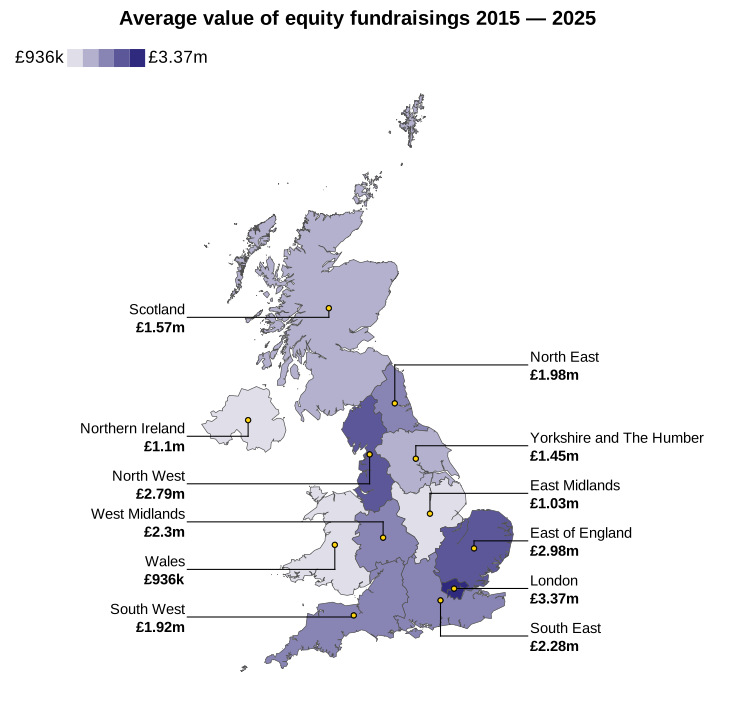
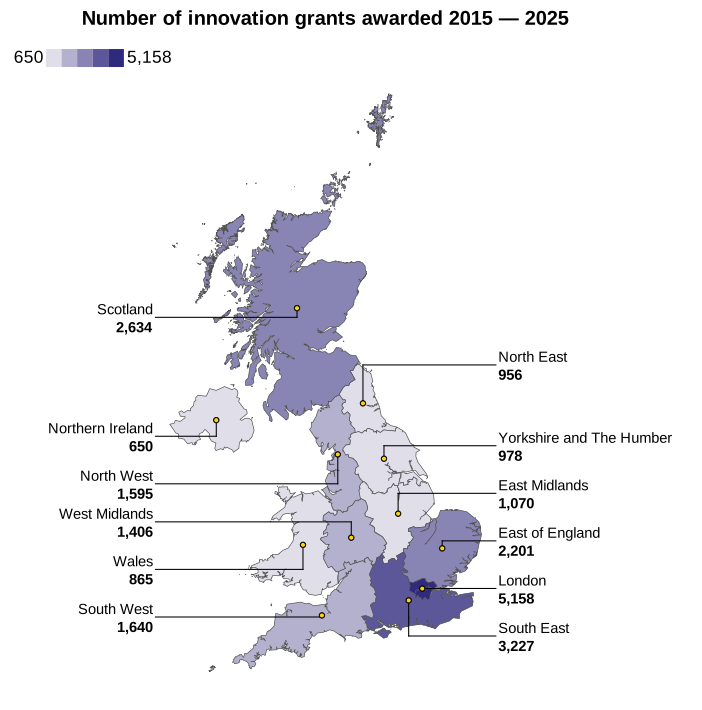
To answer this question, we’ll use the data at our fingertips on the Beauhurst platform and examine the North-South divide by analysing the UK business economy. This includes regional data around high-growth businesses, equity investment, innovation grants awarded, and GVA (gross value added) to the UK economy.
Methodology for high-growth companies
We will compare the total number of active high-growth companies as of 1 January, 2015 to those active as of 10 March, 2025. A company is classified as high-growth if it possesses a Growth Signal on the Beauhurst platform.
These include:
- Equity fundraising
- Debt fundraising
- MBO/MBI
- Accelerator participation
- 10% scaleup
- 20% scaleup
- Acquisition
- IPO
- Inclusion on a recognised high-growth list
High-growth companies by region
Back in 2015, London led the UK with 26.2% of high-growth companies headquartered in the capital. Ten years on, following Brexit and its well-documented impact on jobs and visas, the gap has only widened, with the steady flow of capital and interest from foreign investors outweighing the high cost of operating in the city.
As of March 2025, London now has 31.9% of the share of the UK’s high-growth companies, with almost every other region seeing drops in proportion whilst London has enjoyed a 5.7% rise in high-growth companies.
Meanwhile, the South East’s position remains unchanged as the second-most concentrated region for high-growth companies across the UK. In 2025, the South East is home to 13.7% of companies in the high-growth ecosystem — a beneficiary of the golden triangle of universities in Oxford, Cambridge, and London.