As Beauhurst’s recent report on overseas investment into the UK revealed, funding from abroad surged to record level highs in 2017. The majority of this funding went to companies headquartered in London. After London, the next hotspot region for overseas funding was the East of England. We suspect the tech cluster surrounding Cambridge is becoming more visible on the global investment scene. However, there has been less research conducted into the so-called “Silicon Fen” with regards to the younger generation of startups and scaleups. We wanted to explore this tech ecosystem, identifying key trends, strengths and weaknesses.
Cambridge’s reputation as a tech hub precedes that of London. According to the University of Cambridge’s website, Trinity College started the city’s embryonic tech scene in 1970 by founding the Cambridge Science Park. Since then numerous technology centres and accelerators have been set-up in the Silicon Fen, usually in collaboration with the university. A report by SQW revealed that in 2011, there were about 900 high-tech businesses in Cambridge, employing around 37,000 people – nearly a quarter of all jobs in the city.
The first tech giant in the Silicon Fen was Acorn Computers, established in 1978. Their early computers were popular amongst domestic consumers in the 80s. Whilst the company was broken up in 1998, their subsidiary ARM Holdings is now one of the world’s leading developers of semiconductors, which are used by, amongst others, Apple. In 2016, ARM was acquired by Japan’s Softbank for £24b, in the UK’s largest ever tech deal.
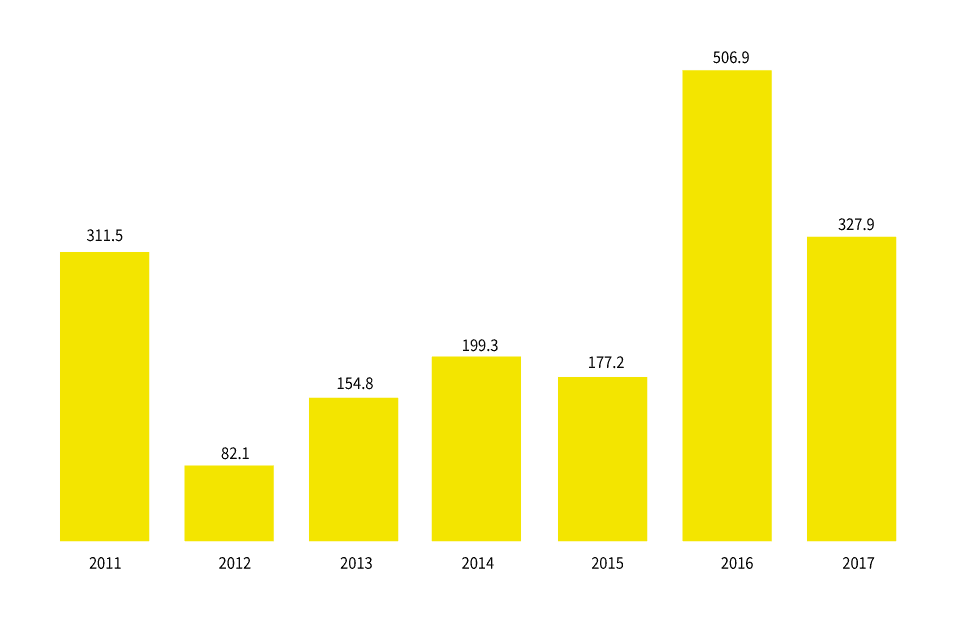
For younger independent companies the figures are understandably smaller. In terms of announced VC and PE investment into independent Cambridgeshire tech companies, £1.58b has been invested since 2011. Funding plateaued somewhat after 2011, before jumping to £506.9m across 65 deals in 2016. 2017 saw a slight drop in funding.