Cast your mind back. Leicester City are Premier League champions, Drake’s “One Dance” is still number one in the UK charts and Jon Snow has defeated Ramsay Bolton at the “Battle of the Bastards” in Game of Thrones. It’s 23rd June 2016, and Britain has just voted to leave the European Union (EU).
The country had been through one of the most bitterly divisive political campaigns in living memory, one whose consequences still reverberate to this day. At the centre of both campaigns were arguments about how our new relationship with Europe would impact investment into UK companies.
In one corner “Vote Leave” insisted the UK would “continue to attract significant foreign investment” on the basis of language, common law, time-zone and its tax system rather than EU membership. In another, George Osborne from the Remain campaign claimed “Britain would be permanently poorer if it left the European Union. Under any alternative, we’d trade less, do less business and receive less investment”. Barack Obama also famously claimed post-Brexit Britain would be “back of the queue” for any trade deals.
But who was right? A decade on from the referendum, the Beauhurst Insights team wanted to measure what happened to foreign equity investment into UK private companies and test whether either campaign’s claims were correct.
Foreign equity investment into UK companies since Brexit
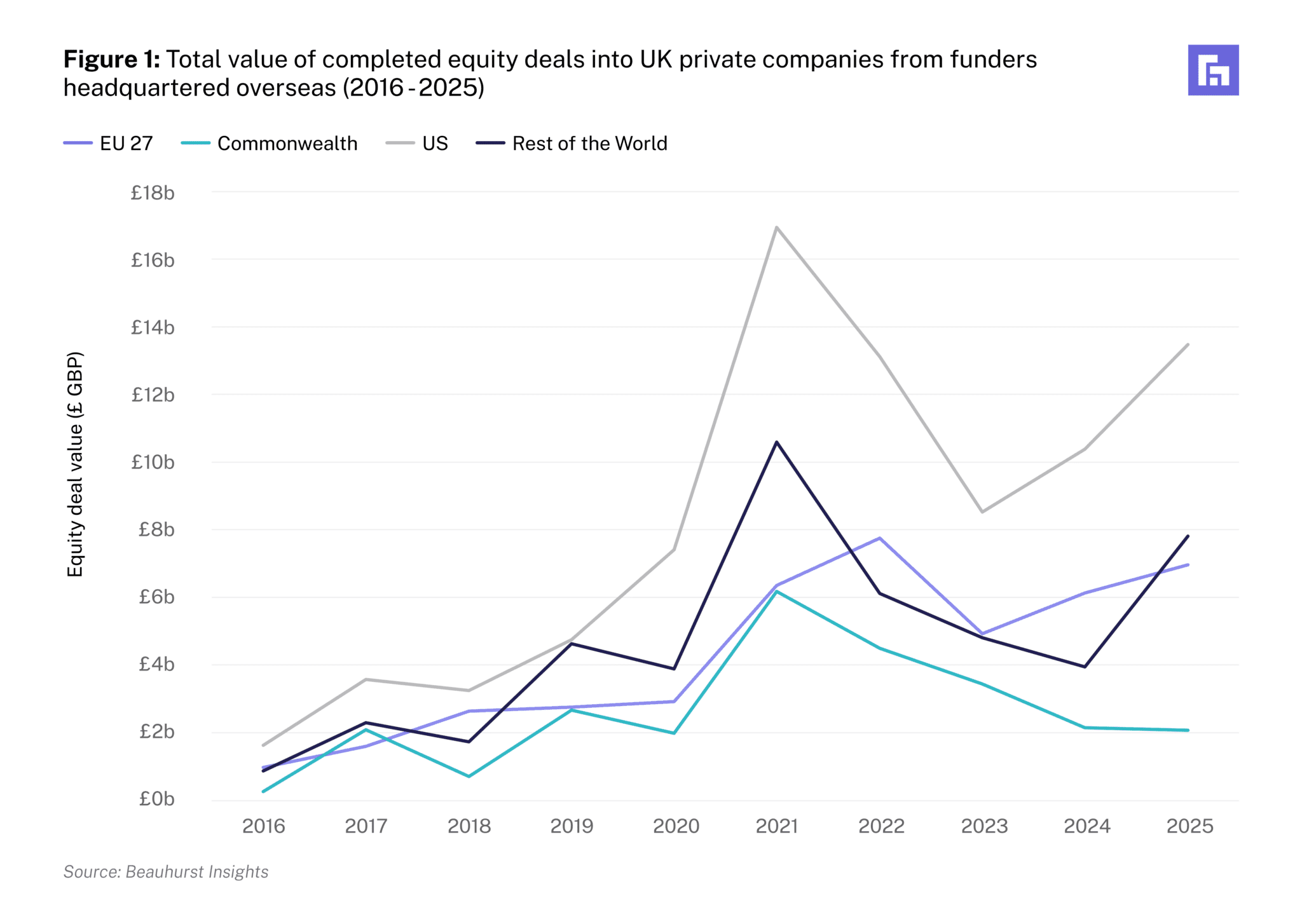
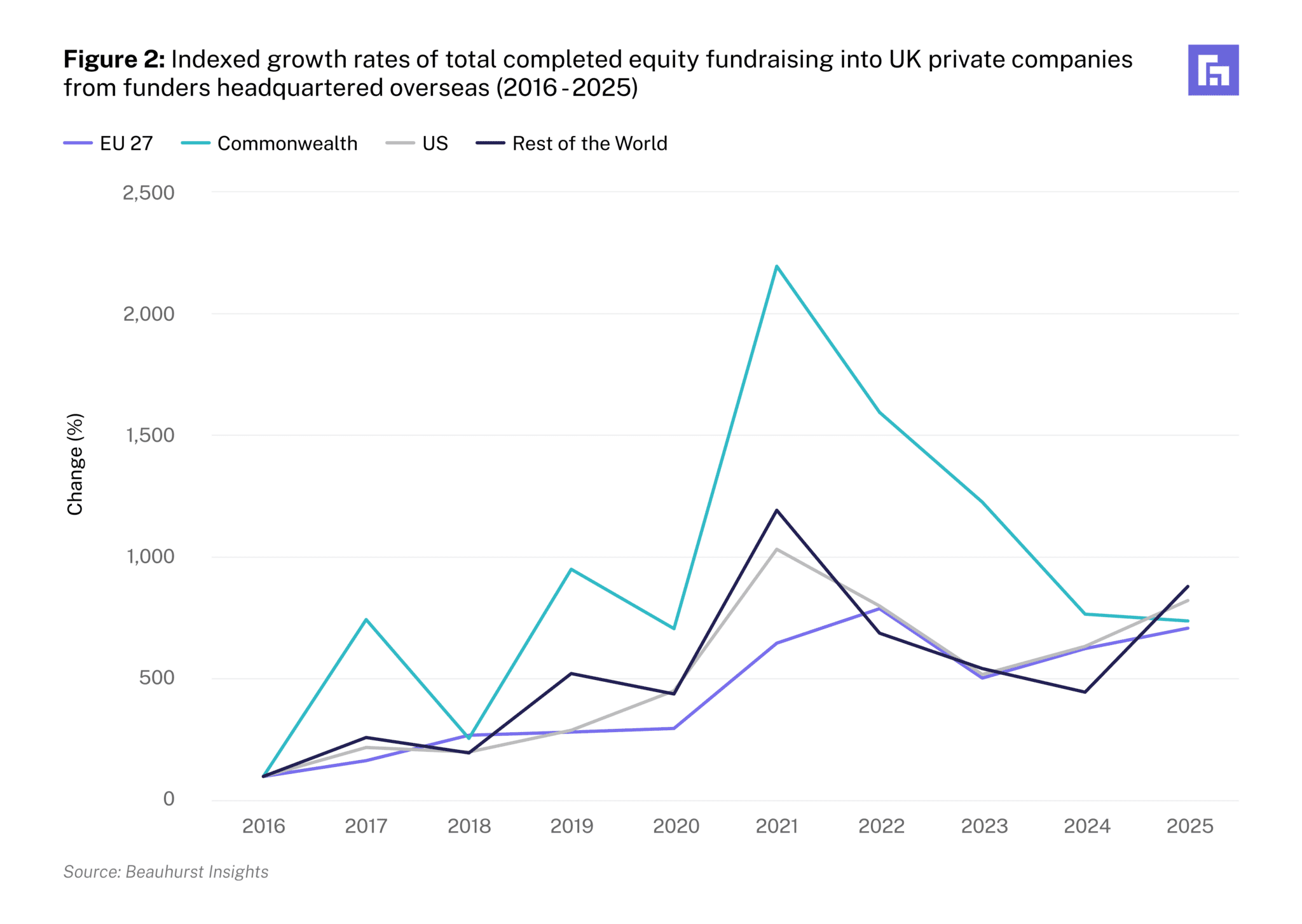
Despite the warnings, equity investment into British companies did not collapse after Brexit. Beauhurst’s data shows UK firms are now attracting more equity funding from EU investors than they were before the referendum. As Figure 1 shows, the total value of completed equity deals involving EU-based investors grew roughly sevenfold over the measured period, from around £985m in 2016 to just shy of £7bn in 2025. That broadly tracks a wider global rise in equity investment, with US-based investors remaining the single largest source of capital into UK private companies over the last decade.